Collaborative Care to Relieve Psychological Distress in Patients with Medically Inoperable Lung Cancer: Design and Rationale for a Clinical Trial.

Collaborative Care to Relieve Psychological Distress in Patients with Medically Inoperable Lung Cancer: Design and Rationale for a Clinical Trial.

Psychological misery is frequent in lung most cancers sufferers with a poor prognosis. The current research goals to examine the efficacy of collaborative care for sufferers with newly recognized inoperable lung most cancers in South Korea. The research is a three-arm parallel-groups nonrandomized scientific trial with an energetic arm that features distressed sufferers who obtain collaborative care, one comparability arm that features distressed sufferers who obtain enhanced traditional care, and one other comparability arm that features non-distressed sufferers. In whole, 267 consecutive sufferers newly recognized with medically inoperative lung most cancers shall be recruited. The major outcomes are the modifications in Hospital Anxiety and Depression Scale-depression and the Distress Thermometer at 12 and 32 weeks after enrollment.

Sub-analyses of sufferers in the energetic arm of the research will embrace a comparability of the efficacy of a mixture of oral antidepressant (escitalopram) remedy and collaborative care versus that of collaborative care alone. The position of neoadjuvant chemotherapy (NCT) for high-risk gentle tissue sarcoma (STS) is questioned. This research aimed to outline which sufferers could expertise a survival benefit with NCT.All the sufferers from the U.S. Sarcoma Collaborative database (2000-2016) who underwent curative-intent resection of high-grade, major truncal/extremity STS dimension 5 cm or bigger have been included in this research.

The median tumor dimension was 10 cm, and 669 of the sufferers (87%) had extremity tumors. The most typical histology was undifferentiated pleomorphic sarcoma (UPS), discovered in 42% of the sufferers. Of the 770 sufferers, 216 (28%) acquired NCT. The sufferers who acquired NCT had deeper, bigger tumors (p < 0.001). According to histology, no subtype had improved RFS or OS with NCT, though the sufferers with UPS had a pattern towards improved 5-year RFS (56% vs 42%; p = 0.092) and 5-year OS (66% vs 52%; p = 0.103) with NCT.

For the sufferers with high-grade STS, NCT was related with improved RFS and OS when tumors have been 10 cm or bigger and positioned in the extremity. However, no histiotype-specific benefit was recognized. Future research assessing the efficacy of NCT could take into account specializing in these sufferers, with added give attention to histology-specific methods. The major finish factors have been recurrence-free survival (RFS) and general survival (OS).Of the 4153 sufferers, 770 have been included in the research.

Receipt of Curative Resection or Palliative Care for Hepatopancreaticobiliary Tumours (RICOCHET): Protocol for a Nationwide Collaborative Observational Study.

There are variations in the administration of sufferers with suspected pancreatic and periampullary cancers and/or malignant biliary obstruction. These variations could also be due to a variety of organizational, institutional, and affected person components that might have an effect on outcomes for these with curable or incurable illness. The Receipt of Curative Resection or Palliative Care for Hepatopancreaticobiliary Tumours (RICOCHET) research would be the first to present a snapshot of investigative pathways throughout the United Kingdom to replicate the real-world follow in these sufferers.

The RICOCHET research is up to date to new nationwide and worldwide scientific steerage and can probably inform future native and nationwide strategic planning to optimize care for sufferers with suspected hepatopancreaticobiliary (HPB) malignancies.The purpose of this research is to outline nationwide variation in the investigative and administration pathways of sufferers with suspected HPB malignancies and to decide the impact of those variations on affected person outcomes.The RICOCHET research is a nationwide, multicenter, potential research.

It is led by trainees via collaboration between surgical and medical specialties. Patients with suspected pancreatic most cancers, different periampullary most cancers, or extrahepatic cholangiocarcinoma presenting to hospitals in the United Kingdom shall be recognized over 90 days. Each case shall be adopted up for 90 days to accumulate information on the mode of presentation, investigations, interventions, use of native and specialist multidisciplinary staff conferences, and switch of care between hub and spoke websites.

Moreover, our findings shall be offered to affected person teams and sponsoring charities (eg, Pancreatic Cancer UK), who in flip will disseminate key findings to the first beneficiaries of the outcomes: the sufferers. The RICOCHET research was funded in September 2017. Data assortment began in April 2018 and the deliberate finish date for information add is spring 2019. Data evaluation will happen in the summer time of 2019 and the primary outcomes are anticipated to be printed in late 2019 or early 2020.The RICOCHET research is a multidisciplinary, potential, observational research that goals to spotlight variability in follow and to decide whether or not these have an effect on the outcomes of sufferers with HPB malignancies.

This is a trainee-led initiative that makes use of a novel design to obtain full protection of the variations in diagnostic and administration pathways. The RICOCHET research could present proof to develop a extra standardized method to managing sufferers with suspected HPB malignancy. Furthermore, the research will outline dates and intervals between key factors in the affected person pathway.The RICOCHET research outcomes and analyses shall be topic to peer evaluate by presenting them at worldwide cross-specialty conferences and by submitting them for publication in open-access journals.

Collaborative Care to Relieve Psychological Distress in Patients with Medically Inoperable Lung Cancer: Design and Rationale for a Clinical Trial.

Collaborative Molecular Epidemiology Study of Metabolic Dysregulation, DNA Methylation, and Breast Cancer Risk Among Nigerian Women: MEND Study Objectives and Design.

To elucidate the position of metabolic dysregulation and related DNA methylation modifications on breast most cancers danger and aggressive subtypes amongst Nigerian girls. We describe the design and strategies of a collaborative molecular epidemiology research of breast most cancers in Nigerian hospitals.The Mechanisms for Novel and Established Risk Factors for Breast Cancer in Women of Nigerian Descent (MEND) research was designed as a matched case-control research of 350 sufferers, age 18 to 75 years, with newly recognized, treatment-naïve breast most cancers and 350 age-matched wholesome controls from surrounding geographic areas.

Patients with breast most cancers seen for preliminary prognosis at 4 massive tertiary hospitals in southwest Nigeria and one affiliated non-public hospital have been recruited. Healthy feminine controls have been chosen from a cohort of 4,000 wholesome girls recruited as a part of the Human Heredity and Health (H3) in Africa Chronic Kidney Disease Case-Control Study in Nigeria. Tumor and adjoining regular tissue, and blood and saliva samples have been collected for molecular and epigenetic assays.Although recruitment is ongoing, a whole of 416 sufferers have been recruited to date, with tumor and blood samples obtained from a minimum of 310 sufferers.
DNA polymerases as useful reagents for biotechnology – the history of developmental research in the field.

Development of proteome-wide binding reagents for research and diagnostics.

DNA polymerase is a ubiquitous enzyme that synthesizes complementary DNA strands in accordance with the template DNA in residing cells. Multiple enzymes have been recognized from every organism, and the shared capabilities of these enzymes have been investigated.

In addition to their elementary position in sustaining genome integrity throughout replication and restore, DNA polymerases are extensively used for DNA manipulation in vitro, together with DNA cloning, sequencing, labeling, mutagenesis, and different functions.

The elementary capability of DNA polymerases to synthesize a deoxyribonucleotide chain is conserved. However, the extra particular properties, together with processivity, constancy (synthesis accuracy), and substrate nucleotide selectivity, differ amongst the enzymes.

The distinctive properties of every DNA polymerase could result in the potential improvement of distinctive reagents, and due to this fact looking out for novel DNA polymerase has been one of the main focuses in this research area.

In addition, protein engineering strategies to create mutant or synthetic DNA polymerases have been efficiently creating highly effective DNA polymerases, appropriate for particular functions amongst the many varieties of DNA manipulations.

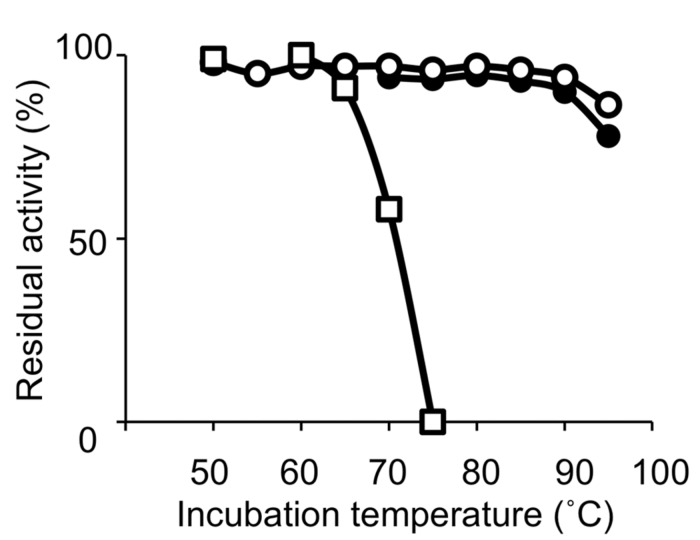
Thermostable DNA polymerases are particularly vital for PCR-associated strategies in molecular biology. In this assessment, we summarize the history of the research on creating thermostable DNA polymerases as reagents for genetic manipulation and talk about the future of this research area.

Development of proteome-wide binding reagents for research and diagnostics.
Development of proteome-broad binding reagents for research and diagnostics.

Development of proteome-broad binding reagents for research and diagnostics.

Alongside MS, antibodies and different particular protein-binding molecules have a particular place in proteomics as affinity reagents in a toolbox of functions for figuring out protein location, quantitative distribution and performance (affinity proteomics).

The realisation that the vary of research antibodies out there, whereas apparently huge is however nonetheless very incomplete and regularly of unsure high quality, has stimulated initiatives with an goal of elevating complete, proteome-broad units of protein binders. With progress in automation and throughput, a exceptional quantity of latest publications discuss with the sensible risk of deciding on binders to each protein encoded in the genome.

Here we assessment the necessities of a pipeline of manufacturing of protein binders for the human proteome, together with goal prioritisation, antigen design, ‘subsequent technology’ strategies, databases and the approaches taken by ongoing initiatives in Europe and the USA.

While the process of producing affinity reagents for all human proteins is advanced and demanding, the advantages of properly-characterised and high quality-managed pan-proteome binder sources for biomedical research, business and life sciences in normal can be monumental and justify the effort.

Given the technical, personnel and monetary sources wanted to fulfil this purpose, enlargement of present efforts could finest be addressed by giant-scale worldwide collaboration.

A Perspective on Reagent Diversity and Non-covalent Binding of Reactive Carbonyl Species (RCS) and Effector Reagents in Non-enzymatic Glycation (NEG): Mechanistic Considerations and Implications for Future Research.

A Perspective on Reagent Diversity and Non-covalent Binding of Reactive Carbonyl Species (RCS) and Effector Reagents in Non-enzymatic Glycation (NEG): Mechanistic Considerations and Implications for Future Research.

This perspective focuses on illustrating the underappreciated connections between reactive carbonyl species (RCS), preliminary binding in the nonenzymatic glycation (NEG) course of, and nonenzymatic covalent protein modification (right here termed NECPM).

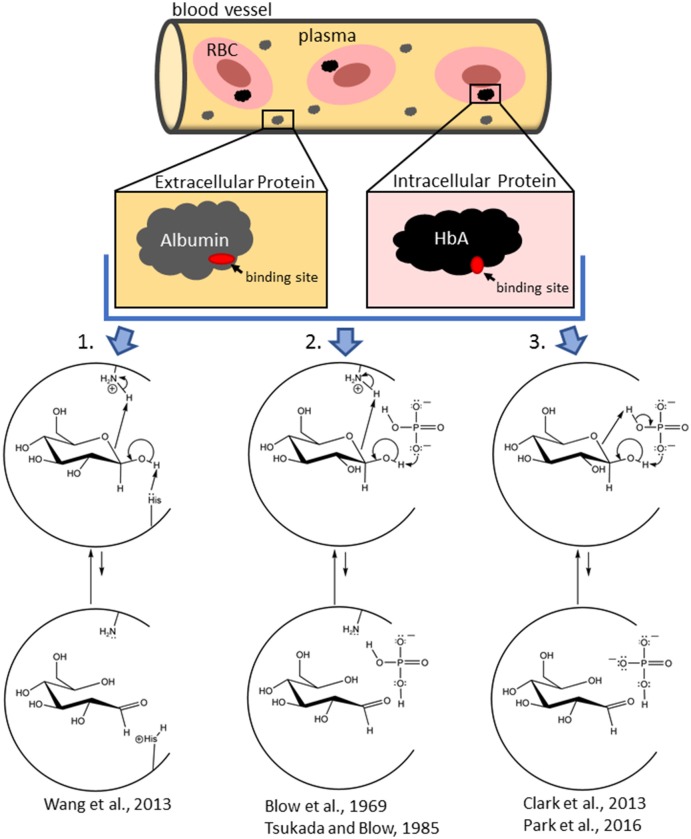
While glucose is the central species concerned in NEG, latest research point out that the initially-bound glucose species in the NEG of human hemoglobin (HbA) and human serum albumin (HSA) are non-RCS ring-closed isomers.

The ring-opened glucose, an RCS construction that reacts in the NEG course of, is most probably generated from previously-bound ring-closed isomers present process concerted acid/base reactions whereas sure to protein.

The technology of the glucose RCS can contain concomitantly-bound physiological species (e.g., inorganic phosphate, water, and so on.); right here termed effector reagents. Extant NEG schemes don’t account for these latest findings.

In addition, effector reagent reactions with glucose in the serum and erythrocyte cytosol can generate RCS (e.g., glyoxal, glyceraldehyde, and so on.). Recent analysis has proven that these RCS covalently modify proteins in vivo by way of NECPM mechanisms. A basic scheme that displays each the reagent and mechanistic range that may result in NEG and NECPM is offered right here.

A perspective that accounts for the relationships between RCS, NEG, and NECPM can facilitate the understanding of web site selectivity, might assist clarify general glycation charges, and might have implications for the scientific evaluation/management of diabetes mellitus.

In view of this attitude, concentrations of ribose, fructose, Pi, bicarbonate, counter ions, and the ensuing RCS generated inside intracellular and extracellular compartments could also be of significance and of scientific relevance. Future analysis can also be proposed.

A Perspective on Reagent Diversity and Non-covalent Binding of Reactive Carbonyl Species (RCS) and Effector Reagents in Non-enzymatic Glycation (NEG): Mechanistic Considerations and Implications for Future Research.

Factors affecting urine reagent strip blood outcomes in canine and nonhuman primates and interpretation of urinalysis in preclinical toxicology research: a Multi-Institution Contract Research Organization and BioPharmaceutical Company Perspective.

BACKGROUNDUrinalysis information in preclinical toxicology research could be influenced by preanalytic and analytic components which have the potential to confound interpretation. There is a paucity of data concerning optimistic reagent strip urinary blood reactions in wholesome nonhuman primates (NHP) and Beagle canine used in preclinical toxicology research.

OBJECTIVEThe goals have been (1) to determine historic management information for reagent strip urinary blood reactions in wholesome NHP and Beagle canine, (2) to find out the incidence of optimistic urinary blood reactions throughout predose and dosing phases, and (3) to find out if assortment apply was a related parameter.

METHODSHistorical management information from 2 establishments in the biopharmaceutical trade have been retrospectively analyzed for reagent strip urinary blood reactions in wholesome NHP and Beagles.

The incidence of optimistic outcomes between the two establishments with completely different urine assortment practices and between males and females was in contrast.

RESULTSThe incidence of optimistic urinary blood reactions in NHP was comparable between establishments (≤ 14% in males; ≤ 33% in females), whereas the incidence of optimistic urinary blood reactions in Beagles was extra variable (≤ 77% in males; ≤ 69% in females), and increased in females throughout the dosing part.

CONCLUSIONSPositive urinary blood outcomes that would doubtlessly be misinterpreted as toxicologically related have been recognized in wholesome NHP and Beagles throughout predose and dosing phases.

Different incidences of optimistic outcomes between the two establishments have been doubtless associated to assortment practices. Strategies to scale back feces and meals contamination of collected urine samples ought to assist reduce false-positive urinary blood reactions.

Semi-automated fact-checking of nucleotide sequence reagents in biomedical research publications: The Seek & Blastn tool.

Semi-automated fact-checking of nucleotide sequence reagents in biomedical research publications: The Seek & Blastn tool.

Nucleotide sequence reagents are verifiable experimental reagents in biomedical publications, as a result of their sequence identities could be independently verified and in contrast with related textual content descriptors.

We have beforehand reported that incorrectly recognized nucleotide sequence reagents are attribute of extremely related human gene knockdown research, some of which have been retracted from the literature on account of attainable research fraud.

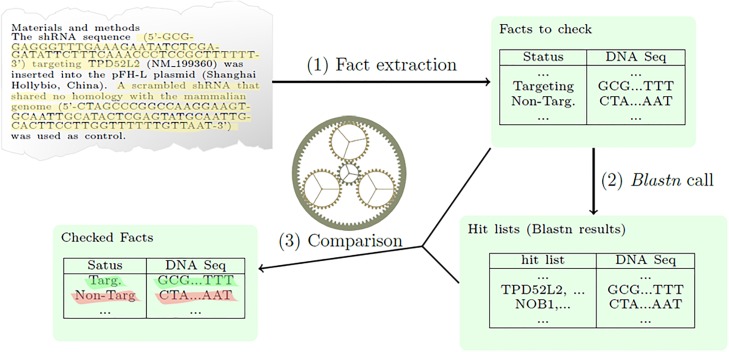
Because of the throughput limitations of guide verification of nucleotide sequences, we developed a semi-automated truth checking device, Seek & Blastn, to confirm the focusing on or non-targeting standing of revealed nucleotide sequence reagents.

From beforehand described and unknown corpora of 48 and 155 publications, respectively, Seek & Blastn accurately extracted 304/342 (88.9%) and 1066/1522 (70.0%) nucleotide sequences and a predicted focusing on/ non-targeting standing.

Seek & Blastn accurately predicted the focusing on/ non-targeting standing of 293/304 (96.4%) and 988/1066 (92.7%) of the accurately extracted nucleotide sequences. A complete of 38/39 (97.4%) or 31/79 (39.2%) Seek & Blastn predictions of incorrect nucleotide sequence reagent use have been right in the 2 literature corpora.

Combined Seek & Blastn and guide analyses recognized a listing of 91 misidentified nucleotide sequence reagents, which might be constructed upon by future research. In abstract, incorrect nucleotide sequence reagents characterize an under-recognized supply of error inside the biomedical literature, and truth checking instruments akin to Seek & Blastn could assist to establish papers and manuscripts affected by these errors.

Semi-automated fact-checking of nucleotide sequence reagents in biomedical research publications: The Seek & Blastn tool.
Semi-automated fact-checking of nucleotide sequence reagents in biomedical research publications: The Seek & Blastn device.

Novel reagents for human prolactin research: large-scale preparation and characterization of prolactin receptor extracellular area, non-pegylated and pegylated prolactin and prolactin receptor antagonist.

To present new instruments for in vitro and in vivo prolactin (PRL) research, novel protocols for large-scale preparation of untagged human PRL (hPRL), a hPRL antagonist (del 1-9-G129R hPRL) that acts as a pure antagonist of hPRL in binding to hPRL receptor extracellular area (hPRLR-ECD), and hPRLR-ECD are demonstrated.

The interplay of del 1-9-G129R hPRL with hPRLR-ECD was demonstrated by aggressive non-radioactive binding assay utilizing biotinylated hPRL because the ligand and hPRLR-ECD because the receptor, by formation of secure 1:1 complexes with hPRLR-ECD beneath non-denaturing situations utilizing size-exclusion chromatography, and by floor plasmon resonance methodology.

In all three varieties of experiments, the interplay of del 1-9-G129R hPRL was equal to that of unmodified hPRL. Del 1-9-G129R hPRL inhibited the hPRL-induced proliferation of Baf/LP cells stably expressing hPRLR.

Overall, the organic properties of del 1-9-G129R hPRL ready by the protocol described herein have been much like these of the antagonist ready utilizing the protocol reported in the unique examine; nevertheless, the newly described protocol improved yields by>>6-fold.

To present long-lasting hPRL as a brand new reagent wanted for in vivo experiments, we ready its mono-pegylated analogue and located that pegylation lowers its organic exercise in a homologous in vitro assay.

As its future use would require the event of a PRL antagonist with extremely elevated affinity, del 1-9-G129R hPRL was expressed on the floor of yeast cells. It retained its binding capability for hPRLR-ECD, and this system was proven to be appropriate for future improvement of high-affinity hPRL antagonists utilizing a library of randomly mutated open studying body of del 1-9-G129R hPRL and deciding on high-affinity mutants by yeast floor show methodology.